RV Ownership Tips

Adventure, Camping, RV Lifestyle & Travel, RV Ownership Tips

Keeping Your RV and Belongings Secure

Keeping Your RV and Belongings Secure When you plan to go RVing you want to let loose and have some fun. With a little bit of prep you can have a great trip. One thing some campers forget to prepare for is keeping their RV secure so they don’t end up on a gloomy trip because belongings were ransacked and taken. Take these basic precautionary steps to safeguard your belongings when on an RV trip. Many times RVs and vehicles are broken into because the prowler/burglar/thief saw something through the window of value or that they wanted. Whenever you and all members or your traveling party are getting ready to leave the RV alone, make sure to do a quick check of any items that are out in plain sight. Anything could be enticing to someone that is looking about to steal something, even a box of food on the counter. Make sure everything is out of sight. Place items in bags, cabinets, drawers, or even under a blanket. If you are traveling with expensive luggage stow it in the closets lock it up tight underneath the RV. Items of high worth are magnets to people looking to resale and make a buck. This may seem redundant because of course you will be researching your destination and where you will be staying while planning your trip. Take a second to research just a step further; check the crime rate. No matter where you are staying you want to look into how safe it is and any possibilities that may make it easy for someone to get into your things. This is also a good rule of thumb for any road trip pit stops you make along the way. It is surprising how many people simply forget or don’t think it is necessary to lock the RV. You may be out in the wilderness far away from the hectic places crime usually takes place, but this is where some prowlers like to hang out. There are less eyes to catch them in the act and less suspicion of crime happening. Lock up every point of access including under RV storage and windows. This might not be what you first think about when you think security while on vacation. RV fires do happen and they can ruin a trip quickly if you do not have the proper safety precautions in place. Make sure you are equipped with plenty of fire extinguishers and smoke detectors. There is vacation insurance. It can help protect you if you do become victim of theft on a vacation. If you own your RV it is a smart idea to make sure it is properly insured and covered by things like theft, fire, and inclement weather. Make sure your valuables are backed up with insurance to help you get them back or replaced. For more tips on RV camping or information on RV rental please feel free to browse our website or contact us anytime. NW Adventure Rentals has a luxurious fleets of motorhomes and travel trailers, conveniently located in the Pacific Northwest at our Seattle location! Let us help you have a great outdoor vacation!
Adventure, Camping, RV Lifestyle & Travel, RV Ownership Tips

Is it Safe to Fill the RV Fresh Water Tank with Any Water?

Is it Safe to Fill the RV Fresh Water Tank with Any Water? The fresh water tank in your RV supplies the water that comes through your faucets and through your fridge in-door water and ice maker (if you have a fridge with that option). Some tanks are larger than others. Depending on the length of your trip, tank size, and location you may find yourself needing more water in your fresh water tank. For example: boondocking (camping without any hookups, usually in a remote location) for a long period of time will mean you need to conserve water or re-fill the fresh water tank. So what do you do when the fresh water tank in your RV is empty? Do you just fill it from anywhere? Can you pull up to a fresh water stream and fill up with that water? What about water that has not been deemed potable at a campsite? Can you filter the water and make it safe enough to use? The Answer: In the not so distant past many outdoor adventurers would go for a day hike and refresh themselves with a hand dipped into the cold, crisp, fresh, running waters of the babbling brook and brought up to the mouth for a drink. They didn’t get sick and the water tasted amazing. Today, however, using water from a stream or other non-potable source is much more different. The waterways all over are much more polluted now than they used to be and we are also much more knowledgeable of micro organisms and pathogens: where they reside and how they effect human health. Animals also make their home in streams, lakes, etc. so these bodies of water have animal feces and other harmful substances. For this reason it is not safe to use just any water source for drinking/cooking/produce washing/teeth brushing/etc. Water must be treated first. A regular water filter will not be enough to filter out our kill every harmful thing that is living in the water source. If you find yourself in an emergency situation you can treat water by boiling it at a high rolling boil for at least one minute. If you are camping at a high altitude of say a mile above sea level you will want to boil at a high rolling boil for a full three minutes or more. In order to have enough water to use for regular camping this would take a very long time. Instead of trying to treat water on your own in the instance of running out or in an emergency it is best to have large jugs or collapsible containers of fresh potable water in reserve. For more tips on RV camping or information on RV rental please feel free to browse our website or contact us anytime. NW Adventure Rentals has a luxurious fleets of motorhomes and travel trailers, conveniently located in the Pacific Northwest at our Seattle location! Let us help you have a great outdoor vacation!
Adventure, Camping, RV Lifestyle & Travel, RV Ownership Tips

Gas Up the RV and Leash Up: Let’s Go Camping

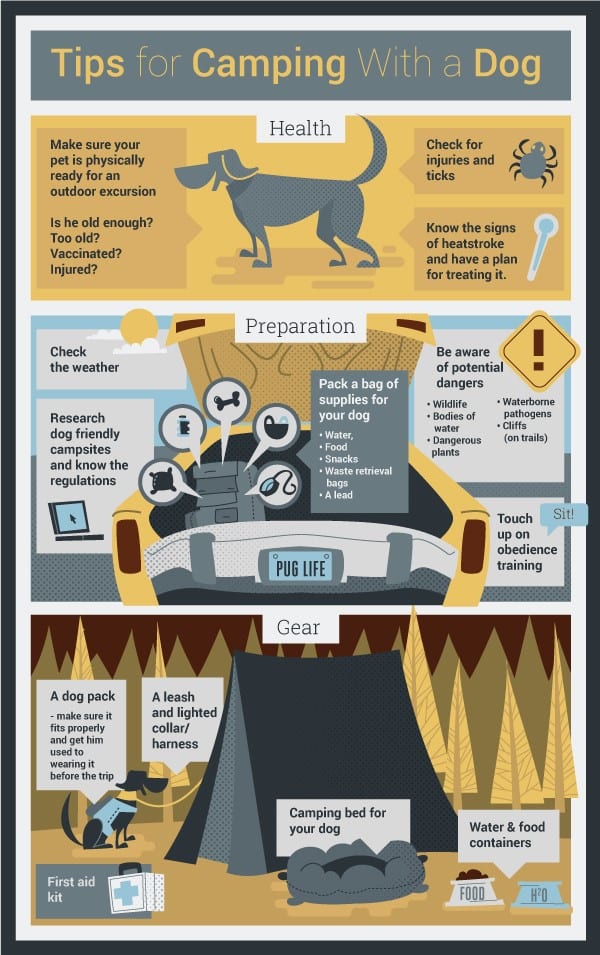
Gas Up the RV and Leash Up: Let’s Go Camping RV camping combines the perks of camping with the comforts of home – minus the biting mosquitoes and scary bathroom trips in the pitch-black darkness. If you’re a dog owner, your pooch likely runs the home, or at least he thinks he does, so why not let him accompany you on you next RV camping trip? While an RV is like home, your dog will still be exposed to potential dangers, and there might not be a store close by if you forget the dog food. Use this infographic to learn helpful safety tips, as well as score a packing checklist for Fido. Additional Resources: Health: How do I keep my dog safe while camping? What if my dog sustains an injury on our trip? How do I check for ticks on my pet? Heatstroke and my pup: what do I need to know? Preparation: How do I locate dog-friendly campsites? What are the potential camping-related dangers for my dog? Gear: What packing checklist should I follow? What should I put in my dog’s first aid kit? Is a collar or harness best for my dog during our camping trip? Now that you know what to expect and what to pack, it’s time to gas up the RV and hit the road for a camping trip with your dog. For more tips on RV camping or information on RV rental please feel free to browse our website or contact us anytime. NW Adventure Rentals has a luxurious fleets of motorhomes and travel trailers, conveniently located in the Pacific Northwest at our Seattle location! Let us help you have a great outdoor vacation!

Adventure, RV, RV Ownership Tips

How to Use the RV Water Heater Properly

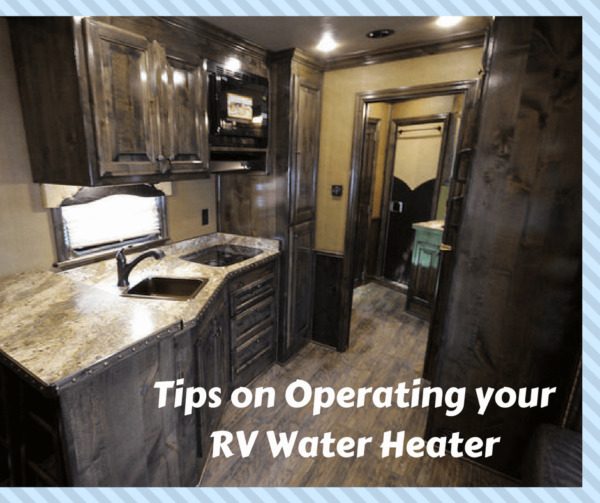
How to Use the RV Water Heater Properly Generally, those who camp in an RV are looking for a little extra comfort while enjoying the outdoors. RV camping provides many comforts you generally don’t get with other camping styles such as: beds off the ground with sheets, privacy, protection from crummy weather, heat, air conditioning, a fridge, comfy chairs, a clean toilet, a kitchen, and hot water. Hot water/the water heater is probably one of the things at the top of the “Reasons to Use an RV” list for most people.The water heater in an RV allows for hot showers, and clean dishes. It allows for those comforting things we often don’t think about or take for granted at home. The water heater plays an important role in a comfy RV camping experience. Here are nine things that are good to know about RV water heaters: 2. Heater tanks come in different sizes. The most common RV hot water tanks are 6 and 10 gallon sizes, though there are larger and smaller ones. The larger the RV, the larger the tank you will want to have. 3. An RV tank is significantly smaller than a home water heater tank. The smallest home tanks range from about 40 to 50 gallons; around five to ten times the size of an RV tank. The hot water in an RV is going to run out much faster than at home. Remember to use hot water in the RV sparingly. Try turning off the water while soaping up in the shower, and fill the sink with water to wash dishes rather than just letting the faucet run. 4. You can take a longer hot shower simply by turning on just a small amount of very hot water first followed by the cold. 5. Special shower heads allow for longer RV showers. There are many shower heads that use less water in an RV allowing for the RV users to enjoy a little more time to freshen up. If you find an RV with one of these, it is a great bonus. They can also be purchased from RV camping stores. 6. Make sure to drain the tank before long seasons of non-use if you own your RV. You don’t want the pipes to freeze and crack during colder months when not in use. 7. Make sure the bypass valve is switched off before heading out on a trip after non-use. You don’t want to heat a tank with no water in it as you could cause serious damage. 8. Avoid corrosion with an anode rod. Using an anode rod re-directs corrosion from the tank to the rod. Anode rods are cheap (about $20 ) and can increase the life span of your tank exponentially. 9. If the water heater is on and working, but only lukewarm water is coming out of the faucets, check the hot and cold faucets to the outside and make sure they are off. Leaving these on can cause hot and cold water to mingle and keep hot water from running inside the RV. Knowing how the RV water heater works will help you to have a comfortable and more enjoyable camping trip. For more tips on RV camping or information on RV rental, please feel free to browse our website or contact anytime. NW Adventure Rentals has a luxurious fleet of motorhomes and travel trailers, conveniently located in the Pacific Northwest at our Seattle location. Let us help you have a great outdoor vacation!

Adventure, Camping, RV Lifestyle & Travel, RV Ownership Tips

Grade Signs and What They Mean

Grade Signs and What They Mean Take a short drive just a few hours east or west from the NW Adventure Rental offices and you will find some of the most beautiful mountain ranges and scenery in the world. And with the Olympics on one side and the Cascades on the other, you are bound to find a sign warning of a steep grade. When you first see these bright yellow signs they can seem a bit cryptic and mysterious, but they are actually very simple and extremely useful to RV drivers. In simple terms- grade is the amount of rise or drop in a given distance. For example: a five percent grade would mean that the road is going to rise or fall five percent over the next 100 feet. In a more specific example: if a sign says 5% downgrade next four miles, this means you will descend 1,056 feet over the next four miles. This is how we got to that number: there are 5,280 feet in a mile, so multiply that by 4 to get 21,120 feet and multiply that by .05 to get the five percent grade. Luckily you don’t have to do all that math in your head when you see a road grade sign to decipher if the grade is going to be steep. When a grade is 5 percent or greater you will see signage to make you aware. Law prohibits U.S. Interstates from having grades higher than 6 percent, however on other roads and non U.S. highways there is no limit. What RV drivers really want to be cautious of is stretches of road with long grades. The longer the grade, the more care should be taken. A short length super steep grade into the double digits may seem more intimidating, but a long grade of only 5 percent can do a number on your brakes if you are not driving properly. When driving over a lengthy grade there are a few techniques to employ. Going uphill, keep an eye on how the engine is operating. You might want to switch off the air conditioner when climbing a hill to keep the engine cool. Watch the temperature readings and, if you have one, keep an eye on the transmission temperature gauge as well. If you see a rise in temperature release the throttle a bit and downshift. Follow this procedure if the engine seems to drag a bit as well. Going downhill requires a lot of steady patience to keep the RV under control. Slow and steady wins the race here. Remember this old trucker’s phrase when driving down a sizable grade: “You can come down the hill too slow many times, but you can come down the hill too fast only once.” This also applies to RV drivers. It is always better to start out slower than you feel you should go because downhill momentum is going to begin to build and if you start too fast it is easy too lose control quickly. A good rule of thumb is to remember what gear got you safely up the hill and use that or a gear lower to come back down again. “Diesel engines will have more effective/actual compression braking whereas gas engines only have grade shifting by using the transmission to reduce speed, much less effective than a true compression/exhaust brake that Diesel engines provide.” – David Izbicki The gear you use for downhill grades should sustain your RV at a comfortable speed and not feel like you are on the edge of rushing down the hill. Some truck drivers use an aggressive braking method that can work for driving an RV as well. It works like this: keep the vehicle with the right gear and find your safe speed. When the RV is at that speed, bear down on the brake until you are five miles an hour below it. Now release the brakes and do not touch them again until the vehicle reaches that safe speed. You should never continuously ride the brakes as this will burn them out. Navigating road grades in an RV is not as intimidating as it seems with the right technique. For more great RV information and RV rentals please browse or website or contact us anytime. NW Adventure Rentals has two luxurious fleets of motorhomes and travel trailers, conveniently located in the Pacific Northwest at our Seattle location. Let us help you have a great outdoor vacation!

Adventure, Camping, RV Lifestyle & Travel, RV Ownership Tips

Packing the Right Clothes for Fall Camping

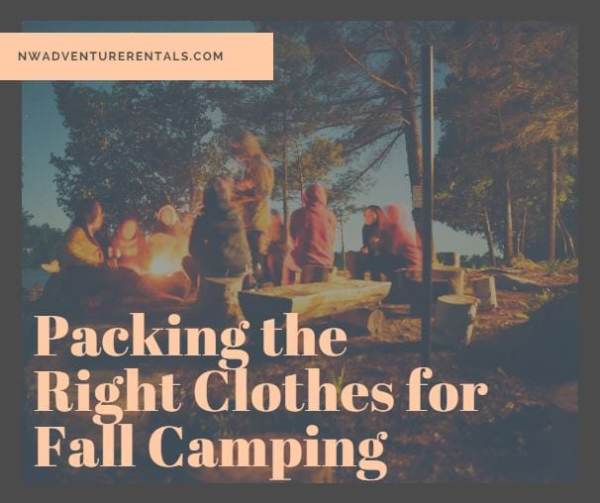
Packing the Right Clothes for Fall Camping Though the weather may be getting colder, fall is a great time to take an RV camping trip. There is still so much to do outside during the fall, and when you are done adventuring through the country side, you can bundle up and get cozy and warm inside the RV. But what does one wear or pack in their suitcase for a fall outdoor excursion? You may have some fall attire that you love, but packing for a camping trip requires your clothing to not just be fashionable but functional, too. Your fall RV trip wardrobe essentials will depend a lot upon your destination and the activities you hope to enjoy while there. Fall is a transitional season and as such the weather is varied depending upon your destination and sometimes it can even vary greatly from day to day or hour to hour in some spots. Here in the Pacific Northwest you can be in a location that may be a nice sunny and slightly crisp 60 degrees, only to change to rain and wind in a matter of hours. Let’s start with the bare minimum essentials of packing clothes for your trip. You of course will want a jacket or coat that is versatile for a range of activities such as a puffer jacket or heavy fleece depending upon the temperature. A good pair of outdoor shoes you don’t mind getting muddy in cooler and moist conditions is also a fall camping staple. The next step to building a fall camping vacation wardrobe is to think about layering. The transitional and varied weather conditions will call for adding and subtracting of layers as the day goes on and the temperature changes. If you plan to spend long hours hiking the countryside or trekking through apple orchards, you will want light moisture-wicking layers that keep the sweat off your skin while holding the moisture in. Start with a base layer of a simple t-shirt, then a button up shirt or flannel, grab a sweater and then put your jacket on over that. Don’t forget about gloves, scarves, and hats. You will also want some warm quality socks. Grab a day bag/pack to carry around with you so you have somewhere to put layers that you shed during the day when you get too warm. It’s not fun to try and carry your extra clothes around, and if you have kiddos shedding layers, they are bound to set them down somewhere and leave them there. It is ok to overpack just a little during the fall. With the weather being so unpredictable it is a good idea to have extra clothes on hand. Don’t forget about an extra pair of shoes as well. Extra socks are always a plus, since there is nothing like coming back to the RV after a long day of adventuring and exchanging your cold/wet/sweaty socks for some nice fresh clean ones. It is also good to have some rain gear on hand just in case, such as coats made for rain, hats, waterproof shoes, and umbrellas. To be sure you don’t overdo it on the packing, think about each day’s activities and pack specifically for each activity. Make sure each family member has one layered outfit for each day. See if there are some layers that could be used multiple times such as sweaters and sweatshirts. Then pack in one or two extra sets of clothes and you should be set. This way you can pack heavier clothes and items without feeling like you are packing too much. The right wardrobe is important for any trip, especially during transitional seasons like fall. You don’t want to get slowed down from enjoying your adventures because you are not well prepared. For more tips on RV camping or information on RV rental please feel free to browse our website or contact us anytime. NW Adventure Rentals has a luxurious fleets of motorhomes and travel trailers, conveniently located in the Pacific Northwest at our Seattle location! Let us help you have a great outdoor vacation!
Adventure, Destinations & Itineraries, RV Lifestyle & Travel, RV Ownership Tips

Geo-Caching – A Super Fun Activity to Do While Camping

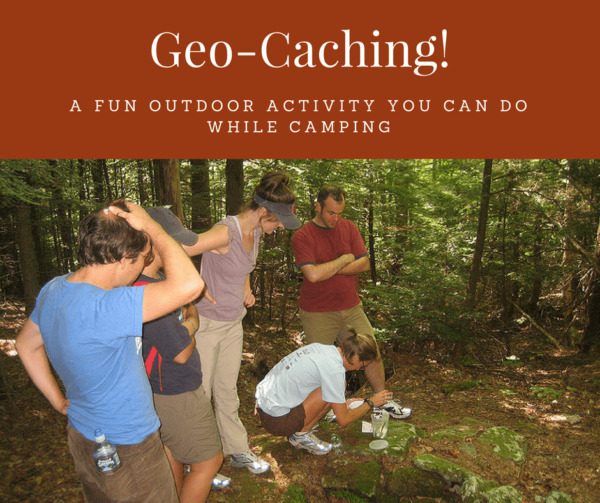
Geo-Caching – A Super Fun Activity to Do While Camping Geocaching has been around for a few years; it is a great outdoor activity that the whole family can get in on! Perhaps this is why geocaching is becoming an increasingly popular activity to do while camping. What exactly is geo-caching? It is like a modern day treasure hunt using technology along with a paper map. Treasure hunters use GPS coordinates and sometimes clues to find a cache hidden by other geo-cachers. A cache is a mix of items like trinkets, a logbook and writing utensil, and maybe even a disposable camera stuffed into a waterproof box and hidden under a rock, behind a tree, or sometimes in a sneaky clever urban location. The geographic coordinates are posted to a geocaching website for other geocachers to find. The most popular site of geocache listings is geocaching.com. Basic Geocaching Guidelines/Tips Geocaching Supplies In order to safely geocache you will need a few items. Geocaching is a great way to get the kids involved and excited about getting outside. With millions upon millions of caches listed, there is bound to be one somewhere around your next RV camping destination. For more detailed information and insider tips on geocaching, check out some books on the subject or browse the web. Let us help you get out on your next epic outdoor adventure. Rent an RV from NW Adventure Rentals and set out on the open road in search of treasure! For more tips on RV camping or information on RV rental, please feel free to browse our website or contact us anytime. NW Adventure Rentals has a luxurious fleet of motorhomes and travel trailers, conveniently located in the Pacific Northwest at our Seattle location! Image by Peter Galvin Flickr

Adventure, Camping, RV Lifestyle & Travel, RV Ownership Tips

How to Keep Wildlife Out of the Campsite

How to Keep Wildlife Out of the Campsite Going out into the wilderness on an RV camping trip puts you right in the middle of wild animal territory. While you want to be respectful of any animal that makes the place you are camping their home, you also don’t want them in your things while you are trying to get away and relax. Though we tend to see more video and equipment toward keeping bears out of a campsite, chances are very low that a bear will invade your space unless you are in known bear country. Most of the time regular campsite invasion offenders are smaller animals like raccoons, chipmunks, squirrels and skunks. The biggest factor that draws animals into campsites is food. Animals generally try to stay away from humans unless there is something interesting in the campsite they want. When an animal smells food and they are hungry, they are going to find a way to get to that food. Unfortunately if you do not have your food properly stored; there is a very high chance of visitation from unwanted creatures to your camping spot. Many animals that make the forest their home can smell strong food odors from items such as raw meat and food scraps from up to a mile away. Since so many animals have such a keen sense of smell it is wise to properly store and dispose of all food after every meal. Just closing up a cooler or sealing a food package is not enough to keep animals from invading and eating your food. Animals can still smell food inside packages and containers and we all know trash bags are like bat signals to raccoons and skunks. The most common food storage mistakes that draw animals into a campsite include: Here’s how to store and dispose of food properly to keep unwanted animals away: Should a critter wonder into your camp here are some things you can do to get rid of them: Raccoons and Opossums- These guys are easily scared with loud noises and clapping, just make sure to keep a distance and don’t try to touch them or pick them up. Skunks- They are also deterred by loud noises, but be aware that their first instinct is to spray, so keep a very good distance and use a really loud noise. Bears- In the off chance a bear wanders into your camp, you will want to slowly and quietly get out of the campsite and to safety. Do not face off with a bear. Forget about the site for now; there is nothing you can do until they leave. For more tips on RV camping or information on RV rental please feel free to browse our website or contact us anytime. NW Adventure Rentals has a luxurious fleets of motorhomes and travel trailers, conveniently located in the Pacific Northwest at our Seattle location! Let us help you have a great outdoor vacation!
Adventure, Camping, RV Lifestyle & Travel, RV Ownership Tips

What to do when someone gets sick on a camping trip

Previous Next What to do when someone gets sick on a camping trip With Autumn also comes cold season. It is no fun when someone comes down with a bug while on the camping trip, especially because an RV can become tight quarters for sickness to easily spread to everyone. Here are some ways to keep your sick travel partners comfortable so they can get well, and to keep the germs from spreading to others while camping in the close confines of an RV. Fresh Air One of the ways we catch colds from those that are sick is being in small spaces with them for long periods of time. RVs, even the largest ones, are pretty close quarters. A great way to get air moving is to open up those windows as long as it is not super chilly outside. Open up the door as well. Clean Surfaces Anything a sick person comes in contact with becomes a petri dish for the cold virus. Make sure all surfaces are wiped down regularly and be aware of surfaces that like to hold onto and breed bacteria, making us even more sick. Mainly anything with pores and crevices. Some areas to make sure are extra clean include: bath mats, hand towels, bed linens, door knobs, faucet handles, light switches, etc. Separate the Sick Person into Comfy Quarters This is beneficial both for the sick person and for everyone else in the RV. A sick person needs lots of rest to get back to 100%, so giving them a comfy place to lay around/hang out and rest will help get them back to optimal health. The best place would be the RV bedroom if there is one with the door closed to keep exposure to germs at a minimum. They can also have a quiet place to relax and maybe even watch some TV/videos. Have a Restroom Plan A sick person is going to need more frequent use of the facilities, whether to take a quick steamy shower or because they are drinking more fluids. If you have children traveling with you it is a good idea to ask them to use the campground facilities instead of sharing the restroom and spreading germs. Make sure to sanitize the restroom frequently. Fill the Air `Boost everyone’s immune system by placing a cut up fresh lemon and a few drops of eucalyptus essential oil in a crock pot and covering with water. Turn the crockpot on and let it fill the air with a pleasant scent that also helps to open stuffy airways and help keep germs at bay. Some Other Common Practices to Use All Year Long to Prevent Sickness For more tips on RV camping or information on RV rental please feel free to browse our website or contact us anytime. NW Adventure Rentals has a luxurious fleets of motorhomes and travel trailers, conveniently located in the Pacific Northwest at our Seattle location! Let us help you have a great outdoor vacation! Image By mcfarlandmo [CC BY 2.0 (http://creativecommons.org/licenses/by/2.0)], via Wikimedia Commons

Adventure, Camping, RV Lifestyle & Travel, RV Ownership Tips

Where Should We Camp? Great RV Options Anywhere

Where Should We Camp? Great RV Options Anywhere One of the most frequently asked questions by RV renters and brand new RV owners is “where should I or can I go in an RV?” The answer to this question is limitless and different for each state and area. Before you begin your great outdoor adventure, you will want to ask what exactly it is that you want in a campground. Are you looking to truly get as far away from civilization as possible and camp without any amenities except what is in the RV? Do you prefer to stay in a resort-type camping space with lots of people and more creature comforts? Whatever is more your style, there is a camping spot to fit your needs. Let’s look at the different types of campsites and campable places around the country that are great for RV camping. Public and Private Campgrounds These are the most easy to locate in any area as long as you have a search engine or campground directory. A campground directory is a large book full of every campsite in a specific area that includes the price, location, amenities and general overview of each campground. Most private and public campgrounds will offer some range of amenities which could include anything from primitive toilets to full hookups, wifi, showers, and even laundry. Make sure to read as much as you can about a campground and look for the amenities to determine if it is a spot you will want to stay in. Also look for the size limitations for RVs; some campgrounds only accommodate smaller RVs. Public Camping Locations These include state and national parks, forest service land, Bureau of Land Management properties, US Army Corps of Engineers land, and Fish and Wildlife Service properties. Each of these places will have their own website and are a treasure trove of camping locations. Make sure you know the camping rules of each location; they may all be public properties but the expectations for campers vary. Find Great Campgrounds by Searching Camping/RV Club websites Not only will these sites have lists of great campsites in the area you wish to travel to, they often have discussion forums about people’s opinions and experiences at different sites. Some will even have insider tips to make your trip in certain places more enjoyable or cost effective. Free Overnight Camping Spots There are some places that you can spend just one night for free without having to boondock out in the wilderness, such as the parking lots of Walmart stores and casinos. These are great short stops for those that plan to take longer RV trips like the great American cross-country road trip. For more tips on RV camping or information on RV rental please feel free to browse our website or contact us anytime. NW Adventure Rentals has a luxurious fleets of motorhomes and travel trailers, conveniently located in the Pacific Northwest at our Seattle location! Let us help you have a great outdoor vacation!